📘 Download your free grammar guide here. 📘
📘 Download your free grammar guide here. 📘
Simple Past Tense Verbs
Simple Past Tense Verbs
- Home
- Verb Tenses
- Simple Past Tense Verbs
Simple past tense verbs show actions that took place in the past.
The children played near the park.
The pretty horse galloped across the field.
Remember that tense means time. So, think of these verbs as past time verbs. They name verbs that were completed in the past.
Principal Parts of Verbs
All verbs can be broken down into what are called four principal parts.
The Four Principle Parts
1. Present
2. Present Participle
3. Past
The past category refers to simple past tense verbs. They show actions that took place in the past.
| Present | Present Participle | Past | Past Participle |
| come | (is) coming | came | (have) come |
| fall | (is) falling | fell | (have) fallen |
| go | (is) going | went | (have) gone |
| graduate | (is) graduating | graduated | (have) graduated |
| know | (is) knowing | knew | (have) known |
| walk | (is) walking | walked | (have) walked |
| write | (is) writing | wrote | (have) written |
Forming the Past Tense
Regular & Irregular
There are two types of past simple verbs: regular and irregular. Let's learn about these two!
Regular Past Tense Verbs
Regular past simple verbs are those that add either a -d or -ed to the present tense form to create the past tense form.
The children skipped past the door.
We walked along the beach.
These regular verbs are so nice and predictable. It's easy to remember how to create the past tense of these verbs because they follow a pattern. (They add either -d or -ed to the present tense form to make the past tense form.) Check it out!
| Present Tense | + -d or -ed |  |
Past Tense |
| walk | + -ed | |
walked |
| pick | + -ed | |
picked |
| move | + -d | |
moved |
| push | + -ed | |
pushed |
Irregular Past Tense Verbs
Irregular past simple verbs are those that don't add -d or -ed to the present tense form to create the past tense form. They are not regular.
The children wrote to their grandmother.
My sister drank all of the milk.
As you know, these irregular verbs don't end in -d or -ed in their past tense. In fact, they don't end in anything in particular. That can make it hard to remember how to form their past tense. When in doubt, look it up in the dictionary!
| Present Tense | + ? | |
Past Tense |
| drive | + ? | |
drove |
| eat | + ? | |
ate |
| have | + ? | |
had |
| begin | + ? | |
began |
| break | + ? | |
broke |
| steal | + ? | |
stole |
| cost | + ? | |
cost |
What Are the Other Verb Tenses?
English verbs have six different verb tenses, and they are broken up into two different groups.
Simple Tenses
- There are three simple tenses. These are your basic, run-of-the-mill tenses.
1. Present Simple My brother knows the answer.
2. Past Simple My brother knew the answer.
3. Future Simple My brother will know the answer.
Perfect Tenses
- There are three perfect tenses. These three tenses are all formed using the helping verbs have, has, had, will, and shall along with the past participle of the verb.
1. Present Perfect My brother has known the answer.
2. Past Perfect My brother had known the answer.
3. Future Perfect My brother will have known the answer.

Hello! I'm Elizabeth O'Brien, and my goal is to get you jazzed about grammar.
Your website is amazing. I am currently doing my student teaching in NYC and your website has been a HUGE help to me. Thank you so much for your vision and for making it happen to help others.
- Bobby, Student Teacher
Your materials are a life-saver and confidence-booster!
- Lori
This is original content from https://www.english-grammar-revolution.com/past-tense-verbs.html
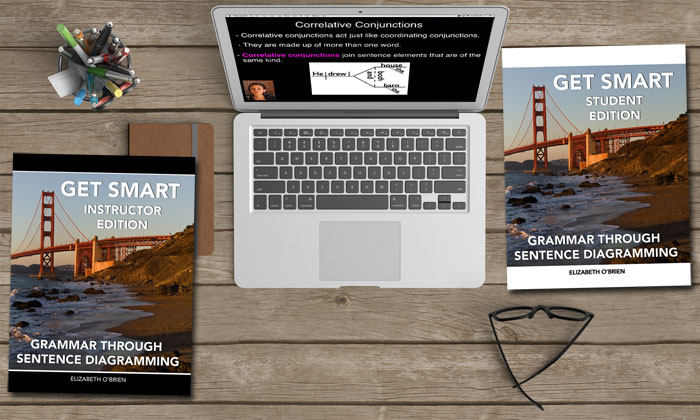
If you'd like to teach or learn grammar the easy way—with sentence diagrams—check out our Get Smart Grammar Program.
It starts from the very beginning and teaches you grammar and sentence diagramming in easy, bite-size lessons.
Our Free Guide Gives You A Fun Way
To Teach And Learn The Basics v

Elizabeth O'Brien is the creator of Grammar Revolution.
Her lessons are guaranteed to give you more confidence in your communication skills and make you smile. :)
- Home
- Verb Tenses
- Simple Past Tense Verbs



Home BLOG SHOP Contact PRIVACY POLICY Your Purchases
Copyright © 2009 - 2025 Grammar Revolution. All Rights Reserved.
JOIN OUR PRIVATE FACEBOOK GROUP RSS INSTAGRAM