What are clauses?
What are clauses?
- Home
- Clauses
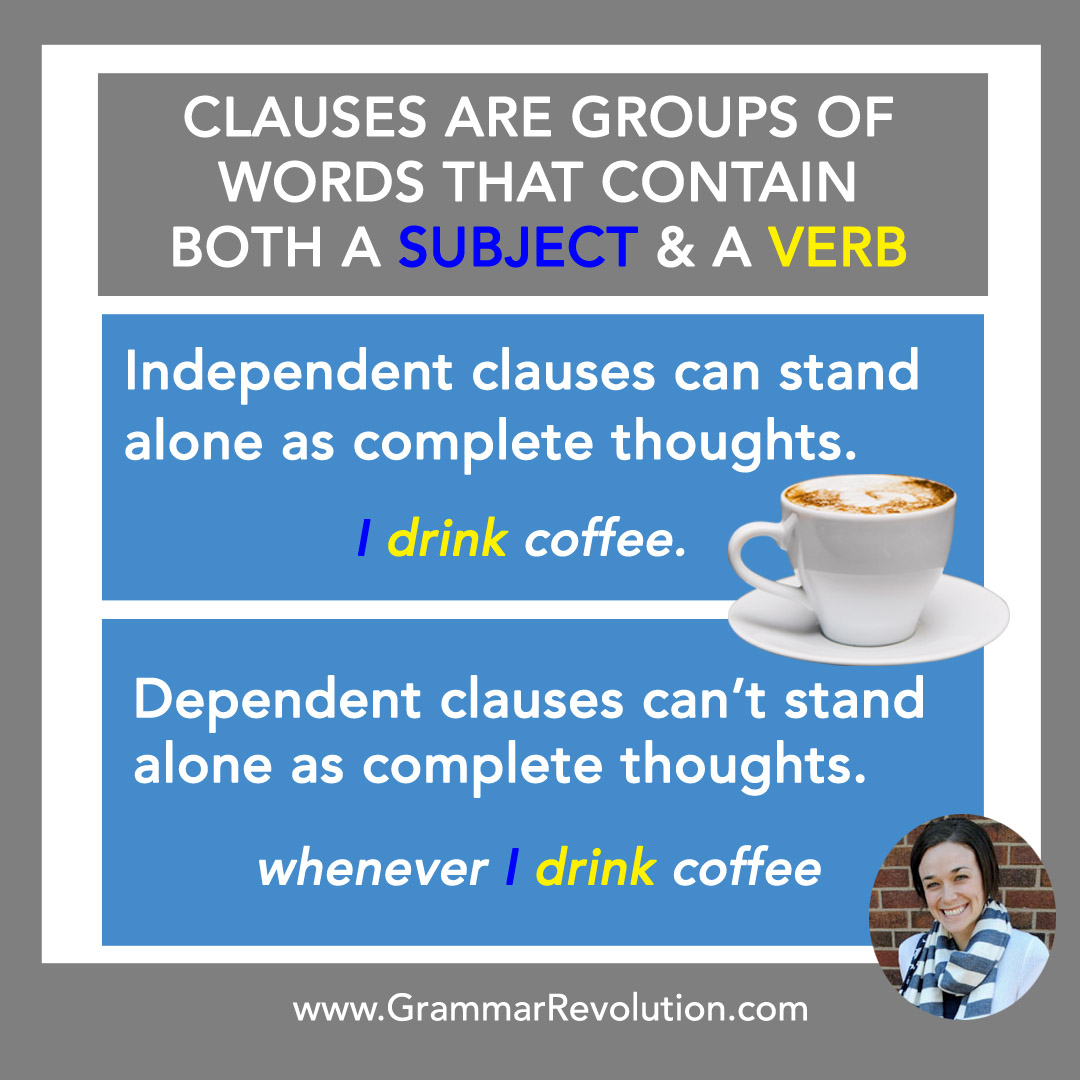
Clauses are groups of words with a subject and a verb.
Wow. That was short. You won't have a hard time memorizing that definition! You should memorize it, by the way. There are two main types: independent and dependent.
1. Independent
These can stand alone because they express complete thoughts.
The sun rises in the east.
Warm brownies taste delicious!
I drink coffee.

2. Subordinate / Dependent
These can't stand alone because they don't express complete thoughts.
since I drink coffee
whenever the sun rises
because I love stories
Do you want to know the super cool thing about these? They act as one part of speech! Isn't that crazy?
All of the words come together to act as an adjective, adverb, or noun.
We can divide these into categories based on what part of speech they function as. When we do this, we get three categories.
The three types of subordinate clauses are adjective, adverb, and noun.
Click on the links below to get in-depth lessons on each one!
1. Adjective
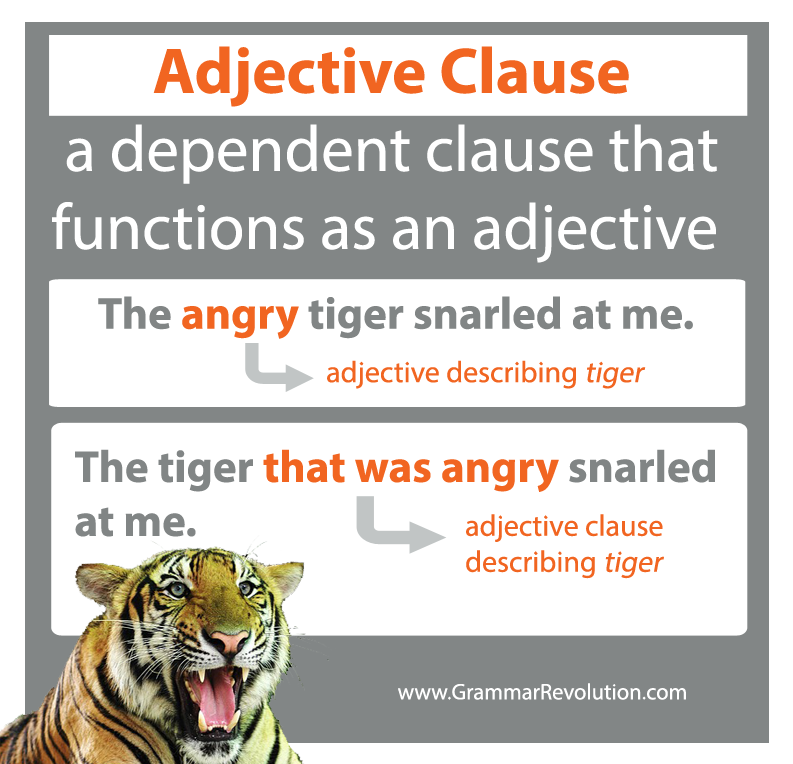
These function as adjectives.
That means that they modify nouns or pronouns. Read more about these.
They are often introduced by special words called relative pronouns (who, whose, whom, that, which), but they can also be introduced by relative adverbs (where, when, why).
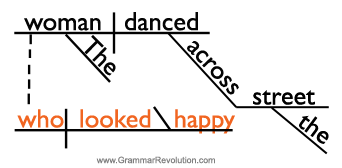
The woman who looked happy danced.
Who looked happy is modifying woman.
Check out the sentence diagram of that sentence. Notice that the diagram shows the adjective clause connected to woman, the noun it is modifying. The diagram really SHOWS that these function as adjectives. Isn't that neat?
2. Adverb
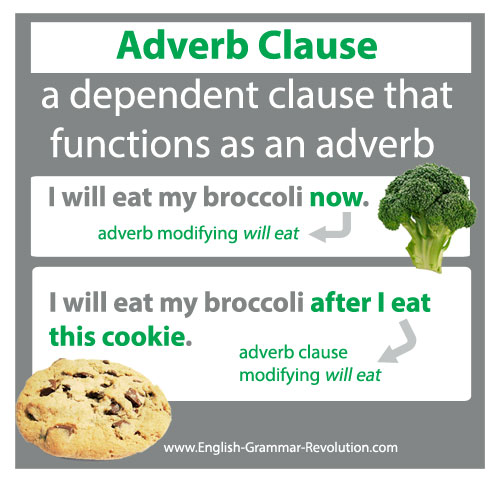
These function as adverbs.
That means that they modify verbs, adjectives, or other adverbs. Read more about these.
These are introduced by subordinating conjunctions (after, before, if, since, until...).
I read because I love stories.
Because I love stories is modifying read.
This is how we would diagram that sentence. Notice that the diagram shows the adverb clause connected to read, the verb it is modifying.
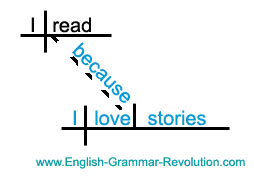
Once again, sentence diagramming makes the relationship between the words visual. (Can you tell that I like sentence diagramming?)
You might want to check out elliptical clauses as well. They are subordinate and they act as adverbs, but some of their words are implied. You can read more about them here.
3. Noun
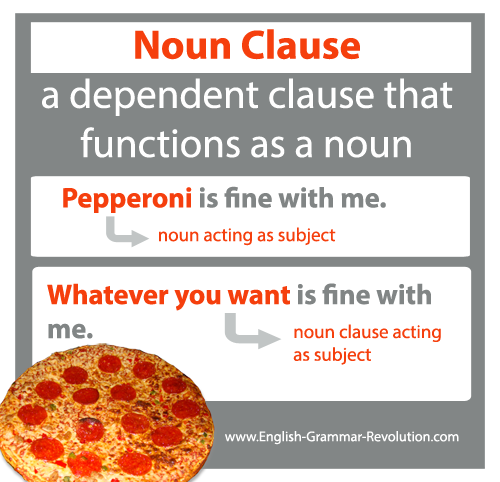
Are you surprised to discover that these act as nouns? You probably already used your powerful brain to figure that out. Read more about these.
These can do anything that nouns can do.
That means that they can be subjects, direct objects, objects of prepositions, indirect objects, and more.
Sometimes these are introduced by words called noun clause markers, and sometimes they have no word introducing them at all!
When we quote direct speech, we often use these. (My mother said, "Elizabeth loves the library.")
My mother knows I love the library.
I love the library is the direct object of the verb knows.
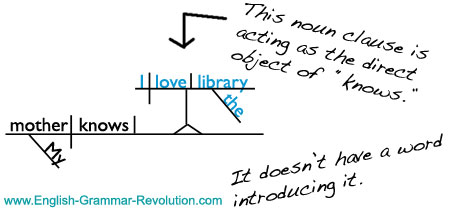
If you know how to diagram sentences, you can see in the sentence diagram that I love the library is sitting in the spot where the direct object goes. If you don't know how to diagram sentences, you'll just have to take my word for it until you learn how to diagram for yourself!
If you'd like to teach or learn grammar the easy way—with sentence diagrams—check out our Get Smart Grammar Program.
It starts from the very beginning and teaches you grammar and sentence diagramming in easy, bite-size lessons.
This is original content from https://www.english-grammar-revolution.com/clauses.html

Hello! I'm Elizabeth O'Brien, and my goal is to get you jazzed about grammar.
I
love your program!! I am using the videos to help teach my students
note taking strategies as well. It has been fun to watch them grow in
confidence in grammar and note taking!
- Amy, Classroom Teacher
Do you know what a clause is now? I hope so!
Our Free Guide Gives You A Fun Way
To Teach And Learn The Basics v

Elizabeth O'Brien is the creator of Grammar Revolution.
Her lessons are guaranteed to give you more confidence in your communication skills and make you smile. :)
- Home
- Clauses



Home BLOG SHOP Contact PRIVACY POLICY Your Purchases
Copyright © 2009 - 2024 Grammar Revolution. All Rights Reserved.
JOIN OUR PRIVATE FACEBOOK GROUP RSS