📘 Download your free grammar guide here. 📘
📘 Download your free grammar guide here. 📘
What is future perfect tense?
What is future perfect tense?
- Home
- Verb Tenses
- Future Perfect Tense
They show actions that will occur before another action in the future.
By Friday, our team will have won the homecoming game.
By next year, I shall have graduated from high school.
The Perfect Tenses: A Brief Overview
Every verb has three simple tenses.
1. Present Tense
2. Past Tense
3. Future Tense
Every verb also has three perfect tenses.
Perfect tense verbs are formed with the helping verbs have, has, had, will and shall.
All perfect tenses use these helping verbs and the past participle of the verb. We'll get into what past participle means in just a minute.
1. Present Perfect Tense Verbs are formed with the helping verbs has and have.
2. Past Perfect Tense Verbs are formed with the helping verb had.
3. Future Perfect Tense Verbs are formed with the helping verbs will have and shall have.
Past Participles
So, what do I mean by past participle?
Well, every verb has what are called four principal parts.
This means that we can take any verb and break it into these parts. Past participles are simply one of those principal parts of a verb.
Here is a chart showing you some examples of verbs broken into their principal parts.
| Present | Present Participle | Past | Past Participle |
| learn | (is) learning | learned | (have) learned |
| won | (is) winning | won | (have) won |
| graduate | (is) graduating | graduated | (have) graduated |
If you'd like to learn more about past participles, click here.
Future Perfect Tense
Remember that they are formed with the helping verbs will have and shall have and the past participle of the verb, and they are used to show an action that will occur before another action in the future.
| will have or shall have | + Past Participle |  |
Future Perfect |
| will have | + learned | |
will have learned |
| will have | + won | |
will have won |
| shall have | + graduated | |
shall have graduated |
There you have it! Now you know how to form this verb tense.
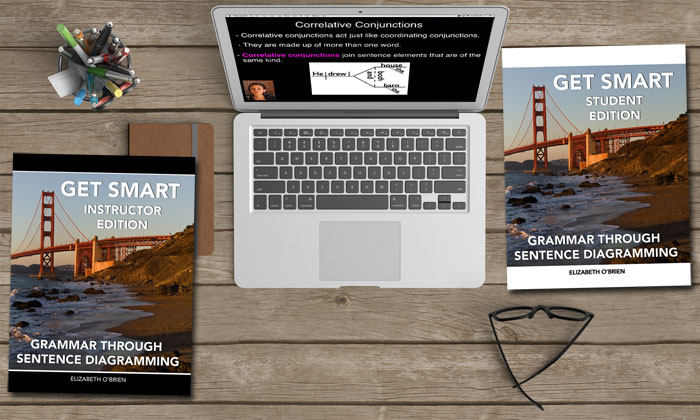
If you'd like to teach or learn grammar the easy way—with sentence diagrams—check out our Get Smart Grammar Program.
It starts from the very beginning and teaches you grammar and sentence diagramming in easy, bite-size lessons.

Hello! I'm Elizabeth O'Brien, and my goal is to get you jazzed about grammar.
I have all your materials, and I think it's all superb. It is a great way to make grammar tuition more dynamic/interactive and less didactic. It also appeals to visual learners.
- Terry, Literacy Program Coordinator
This is original content from https://www.english-grammar-revolution.com/future-perfect-tense.html

Our Free Guide Gives You A Fun Way
To Teach And Learn The Basics v

Elizabeth O'Brien is the creator of Grammar Revolution.
Her lessons are guaranteed to give you more confidence in your communication skills and make you smile. :)
- Home
- Verb Tenses
- Future Perfect Tense



Home BLOG SHOP Contact PRIVACY POLICY Your Purchases
Copyright © 2009 - 2025 Grammar Revolution. All Rights Reserved.
JOIN OUR PRIVATE FACEBOOK GROUP RSS INSTAGRAM