Download your free grammar guide here.
What is a conjunction?
What is a conjunction?
- Home
- Parts of Speech
- Conjunctions
What is a conjunction? A conjunction is a word that joins two or more words, phrases, or clauses.
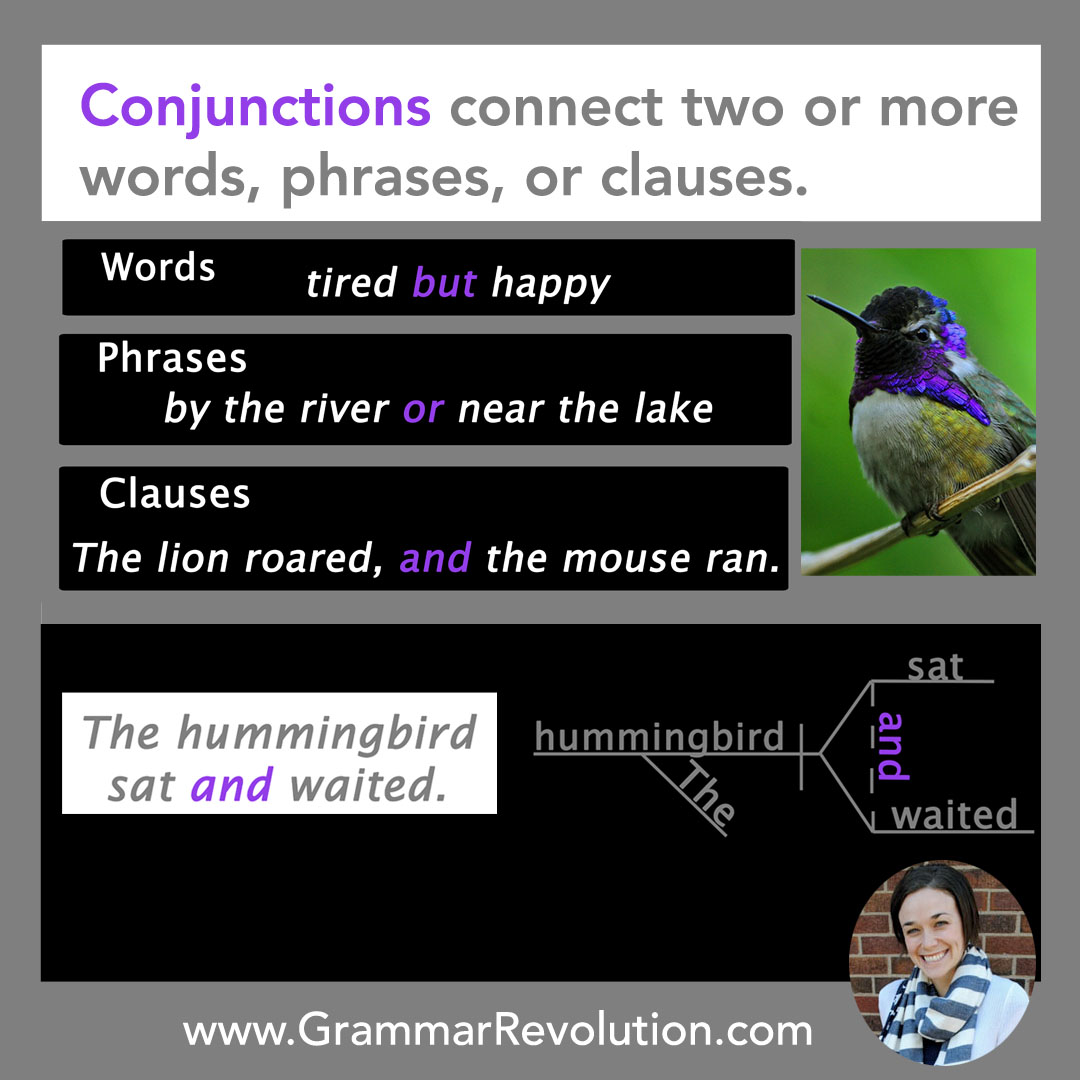
Think of them as gluing words. They glue words, phrases, and clauses together.
If you'd like to have your friend bring music and snacks to your party, it's pretty hard to do it without a conjunction.
You could say, "Bring music. Bring snacks." But it's more efficient to say, "Bring music and snacks." And it's more polite to say, "Please bring music and snacks." :)
Do you see how the conjunction and glues the words music and snacks together?
What is a conjunction? It's a word that joins words, phrases, or clauses.
Okay, read this question and then try to answer it with your eyes closed. What is a conjunction?
How did you do? Did you remember that they join words, phrases, and clauses? Let's look at a few more examples.
- Words: silver and gold
- Phrases: over the river and through the woods
- Clauses: Marianne planted a flower, and she watched it grow.
In all of those examples, we used the conjunction and, one of the most common conjunctions. But, of course, there are many more conjunctions out there. All conjunctions perform the same basic function (gluing things together), but there are three types of conjunctions, and you'll be learning about them next!
1. Coordinating Conjunctions
2. Subordinating Conjunctions
3. Correlative Conjunctions
See a list of these conjunctions here.
What are coordinating conjunctions?
There are only seven of these.
for, and, nor, but, or, yet, so
Some people remember these with the acronym FANBOYS. They glue together sentence elements that are the same.
- Two words: pie or cake
- Two phrases: in the car or on the bike
- Two independent clauses: You must study, or you won't learn grammar.
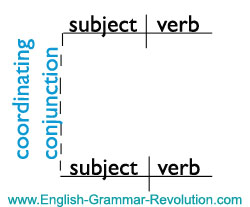
This sentence diagram shows a coordinating conjunction joining two independent clauses. Click here to learn more about diagramming coordinating conjunctions.
What are subordinating conjunctions?
These conjunctions glue dependent adverb clauses to independent clauses.
A dependent adverb clause is group of words with a subject and a verb
that functions as a single adverb. They are introduced by subordinating
conjunctions. There are many subordinating conjunctions. (Here's a way to help you remember them.) Here are a few. (See more on the list of conjunctions page.)
unless, whenever, since, because, if
Subordinating Conjunctions
unless you are allergic
whenever I see your cat
since you are coming
Those are not complete sentences. They all have subjects (you, I, you) and verbs (are, see, are coming), but since they can't stand alone as complete thoughts, they're subordinate clauses.
An independent clause is also a group of words with a subject and a verb. But, unlike a subordinate clause, an independent clause can stand alone.
Independent Clauses
I will bring my cat.
I sneeze.
I won't bring my cat.
These are all complete sentences. They all have subjects (I), verbs (will bring, sneeze, won't bring), and they can stand alone. Subordinating conjunctions let us join subordinate adverb clauses with independent clauses.
I will bring my cat unless you are allergic.
Whenever I see your cat, I sneeze.
Since you are coming, I won't bring my cat.

My mom smiled when I made dinner.
Learn more about diagramming dependent adverb clauses and subordinating conjunctions here!
What are correlative conjunctions?
Correlative conjunctions are used in pairs (either...or, both...and), but they have the same function as coordinating conjunctions. That means that they join things that are the same.
Both David and I are allergic to cats.
Either Mom or Dad will pick you up.
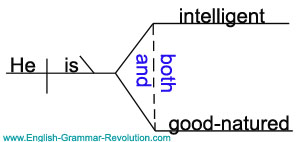
He is both intelligent and good-natured.
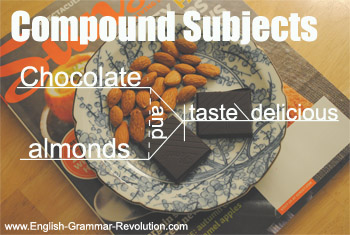
Chocolate and almonds taste delicious.
You've been working so hard learning about conjunctions.
Now you should go and have a snack.
Here's what I recommend. Yum!
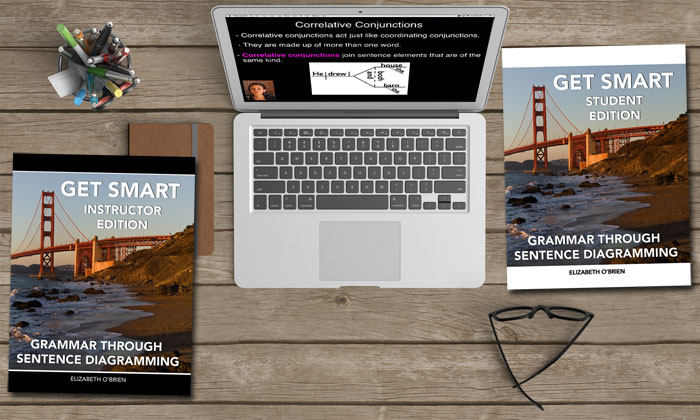
If you'd like to teach or learn grammar the easy way—with sentence diagrams—check out our Get Smart Grammar Program.
It starts from the very beginning and teaches you grammar and sentence diagramming in easy, bite-sized lessons.
Now you can answer all of those people who keep asking you, "Excuse me. What is a conjunction?"

Hello! I'm Elizabeth O'Brien, and my goal is to get you jazzed about grammar.
Join my email list for grammar tips, diagramming fun, and updates about new lessons and resources.
I love your book! I have used your materials to prepare for a Praxis test, and I did well thanks to you.
- Anntoinette
This is original content from https://www.english-grammar-revolution.com/what-is-a-conjunction.html
Our Free Guide Gives You A Fun Way
To Teach And Learn The Basics v

Elizabeth O'Brien is the creator of Grammar Revolution.
Her lessons are guaranteed to give you more confidence in your communication skills and make you smile. :)
Other Helpful Resources
- What is a conjunction? Find the coordinating, subordinating, and correlative conjunctions in this worksheet!
- Home
- Parts of Speech
- Conjunctions



Home BLOG SHOP Contact PRIVACY POLICY Your Purchases
Copyright © 2009 - 2026 Grammar Revolution. All Rights Reserved.